
What is the difference between green tea and matcha?
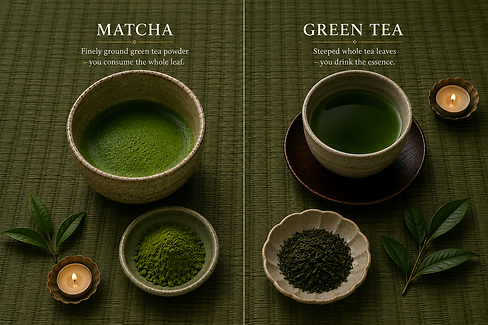
Both green tea and matcha come from the same tea plant (Camellia sinensis), but they are prepared and enjoyed in different ways. Green tea is made from loose tea leaves that are steeped in hot water, while matcha is made from specially grown tea leaves that are carefully stone-ground into a fine powder. The matcha powder is whisked directly into water, allowing you to consume the entire tea leaf rather than just the brewed infusion.
What is green tea?

Japanese green tea is made from the leaves of the Camellia sinensis plant and is carefully steamed shortly after harvest to preserve its vibrant green color, fresh aroma, and natural nutrients. This unique steaming process gives Japanese green tea its distinctive smooth, umami-rich flavor and bright character.
For centuries, green tea has been an important part of daily life and culture in Japan. From refreshing everyday teas like sencha to premium matcha used in traditional tea ceremonies, each variety offers its own unique taste and experience.
Shincha (新茶) literally means "new tea." It is the very first tea produced from the first harvest of the year, typically picked between late April and early May in Japan, depending on the region and weather. Shincha is made from the youngest, most tender tea leaves of the season. After the winter months, the tea plants store nutrients, resulting in leaves that are rich in flavour and aroma. First Pick (also called First Harvest, First Flush, or Ichibancha (一番茶) in Japanese) refers to the first crop of tea leaves harvested each spring.
Types of Japanese Tea

-
Matcha – Stone-ground green tea powder with a rich umami flavor. Great for traditional tea, lattes, and desserts.
-
Sencha – Japan's most popular green tea with a fresh, balanced taste.
-
Genmaicha – Green tea blended with roasted brown rice for a warm, nutty flavor.
-
Hojicha – Roasted green tea with low bitterness and a comforting roasted aroma.
-
Kukicha- Made by separating only the stems and veins of green tea leaves.
-
Bancha – A mild everyday tea with lower caffeine than sencha.
-
Flavoured Green Tea – Japanese green tea blended with natural flavours like yuzu, peach, or lemon for a refreshing twist.
Caffeine Guide

-
Matcha: High
-
Sencha: Medium
-
Genmaicha: Low–Medium
-
Bancha: Low
-
Hojicha: Very Low
-
Coffee: Very High
Health Benefits

Japanese green tea is often called a SUPERFOOD because it contains a highly balanced concentration of health promoting compounds such as Vitamin, Minerals and polyphenols. Rich in antioxidants, particularly catechins, green tea helps protect the body from oxidative stress caused by free radicals. It also contains L-theanine, a unique amino acid that promotes a sense of calm and relaxation while supporting mental focus and alertness.
Green tea provides a gentle source of natural caffeine, offering steady energy without the sharp peaks and crashes often associated with coffee. Many people enjoy it as a balanced way to stay refreshed throughout the day.
Regularly drinking Japanese green tea as part of a healthy lifestyle may support overall wellness. Different varieties offer unique characteristics—for example, matcha contains the whole tea leaf in powdered form, while hojicha and bancha are naturally lower in caffeine, making them excellent choices for the afternoon or evening.
While green tea is not a substitute for medical care or a balanced diet, it has been enjoyed in Japan for centuries as part of a healthy daily routine, combining exceptional flavor with a long tradition of well-being.

How to store tea

-
Keep tea away from light, heat, moisture, and strong odors.
-
Store in an airtight container.
-
Refrigerate only unopened packages if storing long term.
-
Once opened, keep at room temperature in a cool, dry place and enjoy within a few months for the best flavor.
Matcha Guide

Matcha is a finely ground green tea powder made from specially grown tea leaves. Unlike traditional loose-leaf tea, where the leaves are steeped and discarded, matcha is whisked directly into water, allowing you to consume the entire tea leaf. This creates a rich, smooth beverage with a vibrant green color and a naturally sweet, umami flavor.
What Makes Matcha Special?
Before harvest, the tea plants are shaded for several weeks to increase chlorophyll and amino acid levels. The leaves are then carefully harvested, steamed, dried, and stone-ground into an ultra-fine powder. This traditional process produces matcha's distinctive color, aroma, and flavor.
Ceremonial Grade vs. Culinary Grade
Ceremonial Grade
-
Made from the youngest, highest-quality tea leaves
-
Smooth, naturally sweet, and rich in umami
-
Best enjoyed traditionally with hot water
Culinary Grade
-
Slightly bolder and more robust in flavor
-
Perfect for matcha lattes, smoothies, baking, desserts, and cooking
-
Designed to maintain its flavor when mixed with milk or other ingredients
-
How to Prepare Traditional Matcha (Usucha)
-
Sift 2–4 g of matcha into a bowl.
-
Add 30–70 ml of water at 70–80°C (158–176°F).
-
Whisk briskly in a "W" motion using a bamboo whisk until a fine layer of foam forms.
-
Enjoy immediately for the freshest flavor and aroma.
Tip: Avoid boiling water, as it can make matcha taste bitter and reduce its delicate aroma.
Health Benefits of Matcha
Because you consume the entire tea leaf, matcha provides a concentrated source of the natural compounds found in green tea, including antioxidants and L-theanine. It offers:
Powerful antioxidants that help protect cells from oxidative stress
Calm, focused energy from the combination of natural caffeine and L-theanine
A smooth, sustained energy boost without the sudden crash often associated with coffee
A simple way to enjoy the natural benefits of green tea as part of a healthy lifestyle.
How to Enjoy Matcha
Matcha is incredibly versatile and can be enjoyed in many ways:
Traditional hot matcha (Usucha)
Matcha latte
Iced matcha
Smoothies
Baking and desserts
Ice cream and confectionery
Whether you're looking for a mindful tea ritual or a vibrant ingredient for your favorite recipes, matcha offers a delicious way to experience the authentic taste and tradition of Japanese tea.
What is the difference between ceremonial grade matcha and culinary grade matcha?
Ceremonial grade matcha is typically made from carefully selected young tea leaves and is designed to be enjoyed on its own, traditionally prepared with water. It is valued for its smooth texture, delicate sweetness, vibrant colour, and balanced umami flavour.
Culinary grade matcha is designed for recipes such as matcha lattes, smoothies, desserts, and baked goods. It often has a stronger flavour profile and a deeper green colour that can stand out when combined with milk, sugar, or other ingredients.
However, the terms “ceremonial” and “culinary” are not official quality standards, and the quality of matcha can vary greatly depending on the tea farm, cultivation methods, harvesting, and processing.

What's the best sweetener for matcha?

For a sweeter matcha, we recommend using a small amount of honey or another mild sweetener. A gentle sweetness complements matcha's natural character without overpowering its delicate aroma and flavour. Start with just a little and adjust to your taste.
Brewing Guide
NOTE: Brewing time and tea quantity can always be adjusted to suite your personal taste.
-
Sencha 2 g | 150 ml | 70–80°c | 1–2 min
-
Genmaicha 2 g | 150 ml | 80–90°c | 1-1.5 min
-
Hojicha 2 g | 150 ml | 90–95°c | 30 sec-1 min
-
Kukicha 2 g | 150 ml | 80-90°c | 1-1.5 min
-
Matcha 1-2 g | 60-70 ml | 70-80 °c | whisk until frothy & enjoy

A Year in the Tea Fields
🌱 First Harvest (Ichibancha) – April to May
The highest quality tea
-
Picked from the first flush of new spring leaves.
-
Rich in natural sweetness and umami.
-
Smooth, vibrant, and full of fresh aroma.
-
Ideal for premium sencha and ceremonial-grade matcha.
Best for: Tea lovers seeking the finest Japanese tea experience.
🌿 Second Harvest (Nibancha) – June to July
-
Harvested after the first flush.
-
Slightly stronger and more refreshing flavor.
-
Good balance of quality and value.
-
Often enjoyed as an everyday tea.
Best for: Daily tea drinking.
🍃 Third Harvest (Sanbancha) – July to August
-
More mature leaves with a bolder taste.
-
Less sweetness and umami.
-
Commonly used for food service, blends, or culinary purposes.
Best for: Everyday use and cooking.
🍂 Autumn Harvest (Aki Bancha) – September to October
-
Made from mature leaves picked later in the season.
-
Mild, smooth flavor with lower caffeine.
-
Often used for bancha or roasted teas such as hojicha.
Best for: Relaxing evening tea.
What does caffeine in Green Tea do for your body?

Green tea (Sencha) contains about one-third the amount of caffeine as coffee. The combination of caffeine and Theanine (natural amino acid) in Japanese green tea can help support calm alertness and mental focus, as well as a diuretic effect that helps eliminate excess water from body. Consuming before exercise boosts energy metabolism, leading efficient fat burning. You can also expect benefits such as swelling and a detox effect. You can enjoy 3-5 cups per day is generally considered a moderate amount, However, caffeine sensitivity varies from person to person, so it is best to enjoy green tea according to your individual needs.