
How to Whisk Matcha for a Smooth, Fine Foam

A bowl of matcha is made in a matter of seconds, yet those seconds reveal a great deal about the tea. The color should look alive, the aroma should be fresh and green, and the texture should feel light rather than chalky. Learning how to whisk matcha is less about chasing a dramatic cap of bubbles and more about giving finely ground tea the water, movement, and attention it deserves.
For generations, matcha has been prepared with a bamboo whisk called a chasen. Its fine, flexible tines are not a decorative detail. They suspend the tea evenly and create the delicate foam that softens matcha’s texture in a bowl. With good tea, a few simple tools, and a relaxed hand, this small ritual becomes wonderfully approachable.
Begin with tea worth whisking
Matcha is whole shade-grown green tea leaf, stone-ground into an exceptionally fine powder. Because you drink the leaf itself, freshness and sourcing matter. A carefully produced matcha from Shizuoka will generally offer a clean, grassy fragrance, gentle sweetness, savory depth, and a pleasing, lingering finish.
A whisk cannot correct stale, coarse, or poorly stored powder. If the bowl tastes sharply bitter or sandy despite careful preparation, the tea may be old, the water may be too hot, or both. Store matcha in an airtight container away from light, heat, and strong odors. Once opened, enjoy it regularly while its aroma and color are at their best.
For a daily bowl, choose a matcha you enjoy drinking with water alone. A latte-grade matcha can be satisfying with milk, but a bowl of plain matcha asks more of the tea. Its craftsmanship is fully visible.
What you need to whisk matcha
You do not need a formal tea room to make a good bowl, but the right tools make the process easier. A chawan, or matcha bowl, gives the whisk room to move. A chasen creates fine foam without scraping the bowl. A chashaku bamboo scoop is traditional, though a level teaspoon works well when you are beginning.
You will also need a small fine sieve, fresh water, and a kettle. Use soft or filtered water when possible. Water with a strong mineral taste or heavy chlorine can flatten matcha’s sweetness and emphasize bitterness.
A typical bowl of thin matcha, called usucha, uses about 2 grams of matcha - roughly 1 1/2 to 2 chashaku scoops or 1/2 teaspoon - with 2 to 2 1/2 ounces of water. This makes a concentrated but balanced bowl meant to be enjoyed promptly.
How to whisk matcha step by step
Warm the bowl and soften the whisk
Pour hot water into the matcha bowl and let the bamboo whisk sit in it briefly. This warms the bowl so the prepared tea does not cool too quickly, while the warm water gently softens the chasen’s tines. Do not soak the whisk for long periods or leave it submerged after use.
Empty the bowl and dry it thoroughly. Even a small amount of standing water can make the powder cling in uneven patches before you are ready to whisk.
Sift the matcha into the bowl
Place your sieve over the dry bowl and press the matcha through with the scoop or a small spoon. This step takes only a moment, but it is one of the clearest differences between a smooth bowl and a lumpy one. Matcha naturally compacts in its container, especially in dry weather.
Sifting does not change the flavor, but it helps every particle meet the water more evenly. That means less whisking, fewer stubborn clumps, and a silkier sip.
Add a small splash of water first
Bring fresh water to a boil, then allow it to cool to about 175°F. Water that is too hot can pull forward bitterness and mute matcha’s sweeter, more aromatic notes. If you do not have a thermometer, let boiling water rest for several minutes, or pour it into a separate cup before using it.
Add just a small splash of water to the sifted matcha. Use the whisk to gently blend it into a smooth paste, touching the bowl lightly but not pressing hard. This initial paste prevents dry powder from hiding in the corners of the bowl.
Then add the remaining water. There is no need to be overly exact, but a shallow bowl of water gives the whisk space to move and produces a more refined texture than an overfilled bowl.
Whisk quickly, lightly, and with your wrist
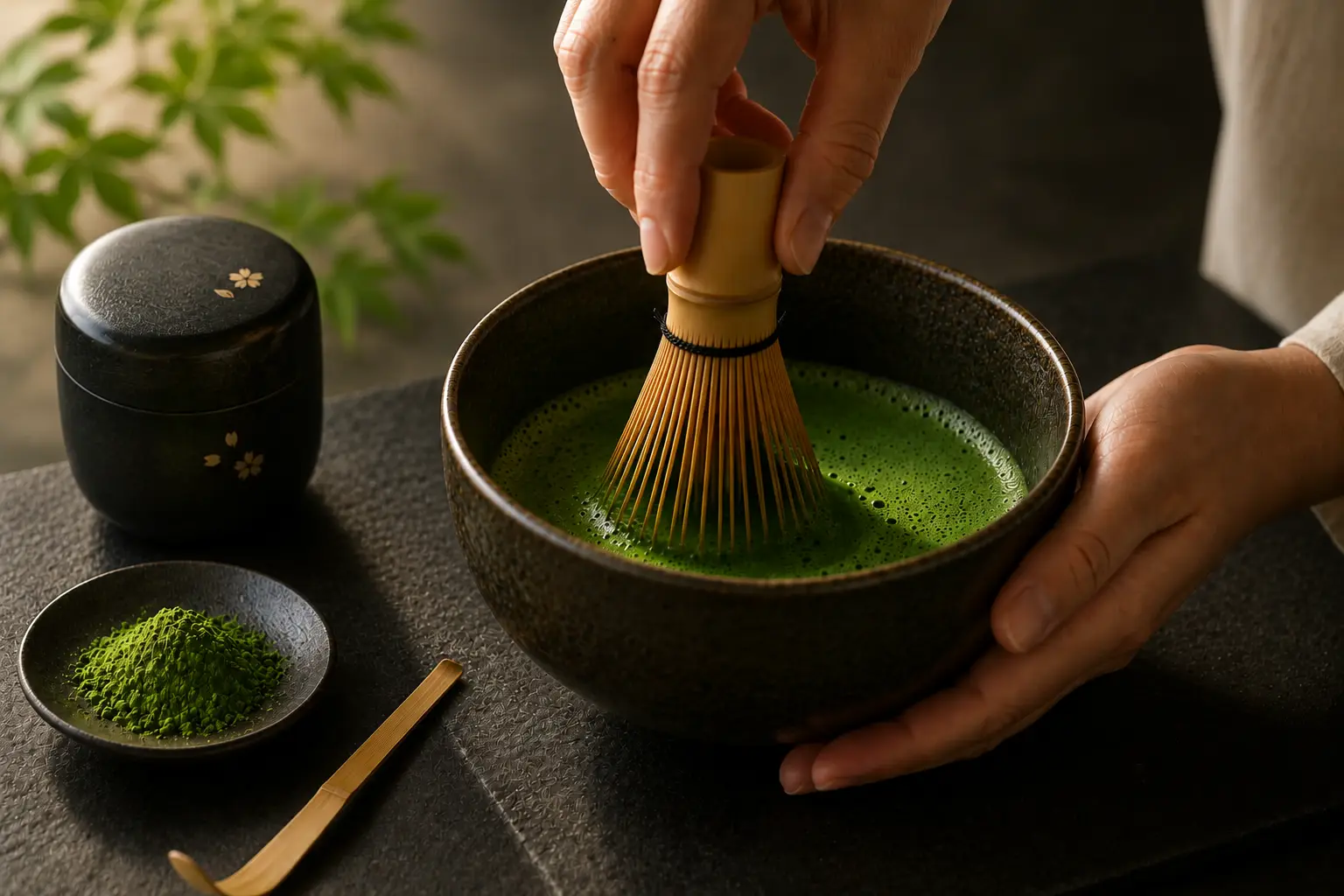
Hold the bowl steady with one hand. With the other, hold the chasen near the top of its handle and whisk briskly using your wrist, not your entire arm. Move the whisk in a quick back-and-forth W or M pattern across the surface and center of the bowl.
Avoid stirring in circles. Circular stirring may mix the powder, but it tends to produce larger bubbles and a heavier texture. The goal is a lively, even suspension with a layer of tiny bubbles, not a froth that stands high above the rim.
Whisk for about 15 to 30 seconds. As the tea begins to foam, gradually lighten your pressure and finish near the surface. A final small circular motion can gather the foam neatly toward the center if you wish, though it is not required.
Drink while the matcha is fresh
Set the whisk aside and enjoy the matcha right away. The powder will naturally settle over time, and the foam will slowly recede. Take a moment to notice the aroma before your first sip: fresh greens, sweet grass, roasted nuttiness, or a gentle marine note may all appear depending on the cultivar and producer.
A well-whisked bowl should taste full but clean. Some astringency is natural in green tea, especially in more vibrant or bold matcha, yet it should not dominate the experience.
Fine foam is a sign, not the whole goal
It is easy to judge matcha by the amount of foam on top. Fine foam is pleasant, but it is not the only measure of good preparation. The deeper goal is an even, creamy texture with no dry clumps and no gritty sediment at the first sip.
Several factors affect foam: the freshness of the matcha, the flexibility of the whisk, the temperature and mineral content of the water, and your whisking speed. A new chasen with many fine tines will generally foam more readily than a worn whisk. Some high-quality matcha also creates a modest, delicate foam rather than a thick layer, which is perfectly natural.
If your matcha tastes good and feels smooth, do not worry if it does not resemble a café photograph.
Common matcha whisking mistakes
When matcha is clumpy, sifting usually solves the problem. If clumps remain, make the initial paste more carefully before adding the full amount of water. Whisking harder after the bowl is full is rarely as effective as beginning with a smooth base.
When matcha tastes bitter, first lower the water temperature. Then consider using slightly less powder or a little more water. Bitter flavors can also be a useful clue: matcha that has been exposed to air, heat, or light loses the tender sweetness that balances its natural green-tea bite.
When the foam is made of large bubbles, use quicker, shorter motions from the wrist and keep the whisk close to the surface toward the end. Do not grind the tines against the bottom of the bowl. It can damage the bamboo and does not make the tea smoother.
When matcha tastes thin, add a touch more powder rather than whisking longer. Whisking is for blending and texture, not extracting flavor the way steeping is.
Know when not to chase foam
Not every style of matcha is meant to be prepared the same way. Usucha is the everyday thin tea described above, and its fine foam is part of the pleasure. Koicha, or thick tea, uses considerably more matcha and less water. It is kneaded slowly into a glossy, dense texture rather than whisked into foam.
Koicha requires a particularly smooth, high-quality matcha because its flavor is so concentrated. It is a beautiful expression of tea craftsmanship, but it is not the place to begin if you are learning. Start with usucha, learn how your tea responds to water and movement, and let your own preference guide you.
After each use, rinse the chasen with warm water only and let it air-dry with the tines facing up, ideally on a whisk holder. Avoid soap, which can linger in the bamboo. Caring for the whisk is a small act of respect for a tool designed to make an everyday bowl feel considered.
The best way to learn is to prepare matcha often enough to notice its quiet changes. Try the same tea with slightly cooler water one morning, or use a little less water the next. In those small adjustments, the character of the leaf - and the soul of genuine Japanese tea - becomes clearer.
Cha no Kokoro — The Spirit of Tea
Whisking matcha is more than simply preparing a drink. In Japan, there is a deeper spirit behind the process—cha no kokoro (茶の心), the heart of tea.
As you prepare your matcha, take your time. Notice the vibrant green of the matcha, the warmth of the bowl, and the gentle movement of the chasen. Be present and enjoy each step rather than rushing toward the finished cup.
This quiet moment of preparation can become a small ritual of mindfulness—a chance to slow down, clear your mind, and appreciate the simple act of making tea.
You don't need to master the Japanese tea ceremony to bring this spirit into your everyday life. Prepare your matcha with care, enjoy the process, and take a moment for yourself.
Sometimes, the ritual of making matcha is just as meaningful as drinking it.


Comments