
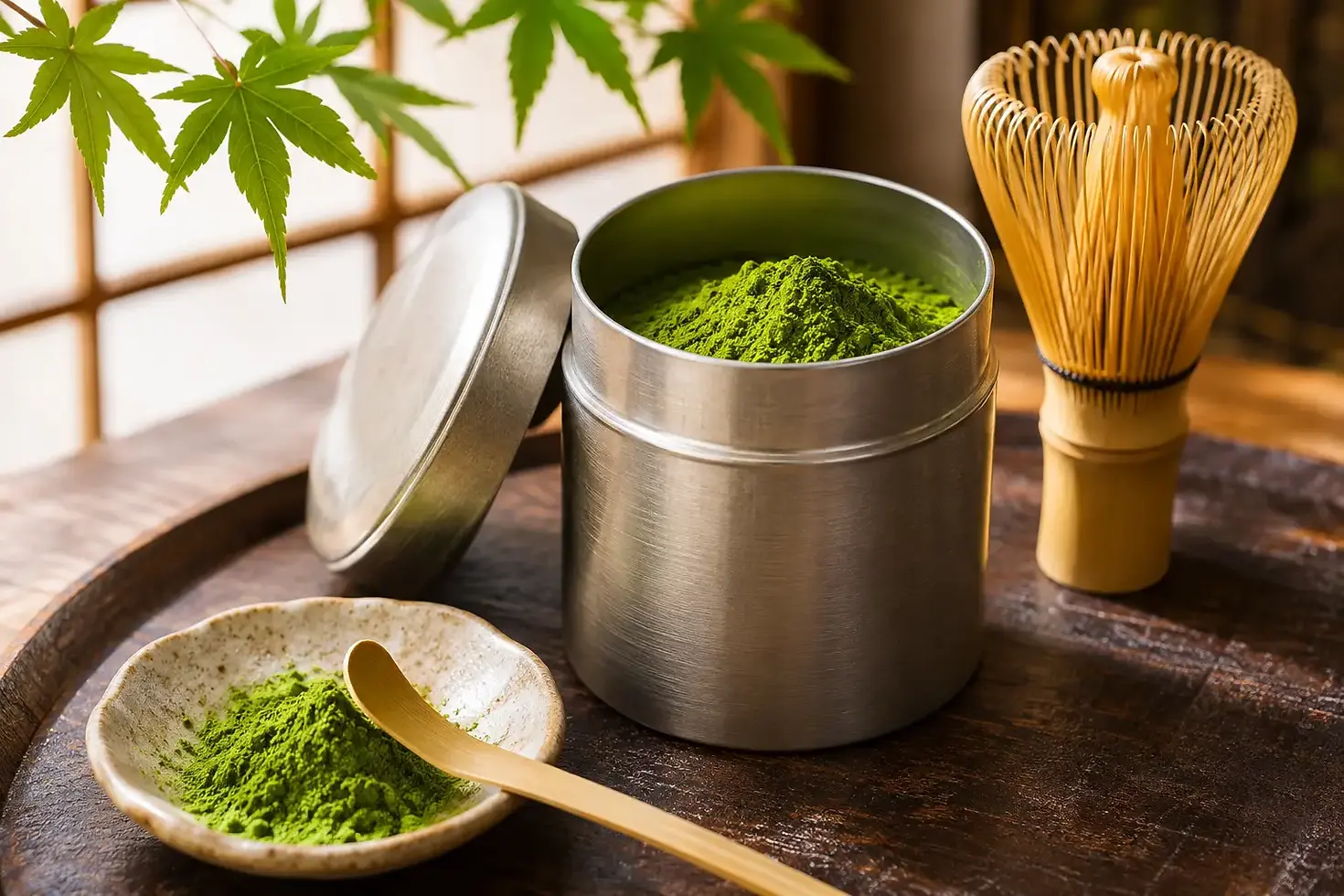
Matcha Expiration Date: How Long Is It Fresh?

A tin of matcha can look perfectly fine long after its best days have passed. The powder may still be green, the lid may still close tightly, and the matcha expiration date may still be months away. Yet matcha is one of the most delicate forms of tea: once finely ground, its color, aroma, sweetness, and lively character become especially vulnerable to air, light, heat, and moisture.
For a tea made with such care, freshness is not a minor detail. It is part of the experience. A well-kept bowl of matcha offers a vivid green color, soft vegetal aroma, gentle umami, and the calm, clear focus associated with naturally occurring L-theanine. Knowing how to interpret the date on the package helps you enjoy the genuine quality the producer intended.
What a Matcha Expiration Date Really Means
In most cases, a date printed on matcha is a best-by date, not a sudden finish line. It indicates the period during which the producer expects the tea to retain its intended flavor, aroma, and appearance when stored unopened under proper conditions. Matcha does not become automatically unsafe the day after that date, but it may no longer express the freshness and craftsmanship that made it special.
This distinction matters because matcha is an agricultural product, not a shelf-stable powdered drink mix. Its character begins in the tea field, where leaves intended for matcha are shaded before harvest. This careful process supports the leaf’s rich green color and savory depth. The leaves are then processed into tencha and stone-ground into an exceptionally fine powder. That fine texture creates a beautiful, full-cup tea, but it also gives oxygen more surface area to affect.
A trusted producer’s packaging date is useful, particularly when buying matcha that has been stored and transported thoughtfully. Still, the date alone cannot tell the whole story. The time since opening and the storage conditions in your kitchen have just as much influence on what reaches your bowl.
How Long Does Matcha Stay Fresh?
Unopened matcha is generally at its best before the printed best-by date, often around 12 months from packaging, although the specific timeline depends on the producer and package. For the most expressive flavor, it is wise to choose recently packed matcha and enjoy it within that period rather than treating the date as a target to reach.
Once opened, matcha is best enjoyed within one to two months. Some carefully stored matcha can remain pleasant for longer, but its brightest qualities gradually soften. If you drink matcha daily, a smaller tin is often a better choice than a large container that sits open for many months. This is especially true for ceremonial matcha, where nuance is the point.
Culinary matcha also benefits from freshness, although its role may be different. In a latte, smoothie, or baked recipe, a slightly older powder can still contribute color and tea character. In a simple bowl of usucha, prepared with water alone, fading freshness is much easier to notice. The less you add around matcha, the more clearly it speaks for itself.
Best-By Dates Versus Opened Dates
A helpful habit is to write the opening date on the bottom of the tin. The printed matcha expiration date tells you about the unopened product. Your own handwritten date tells you when the more sensitive period began.
If a package lists only a production or packaging date, use the producer’s guidance when available. When there is no clear guidance, buy conservatively and plan to use the matcha within several months while unopened. Premium tea is best bought for enjoyment, not long-term storage.
Signs Your Matcha Has Lost Its Freshness
Matcha rarely announces its decline all at once. Instead, look for a change in several senses. Fresh matcha should appear bright to deep green, depending on cultivar and grade, and smell clean, green, and softly sweet. It should whisk into a smooth suspension with a fine, light foam when prepared well.
Aged matcha may shift toward dull olive green, yellow-green, or brown. Its aroma can become flat, dusty, hay-like, or faintly stale. In the bowl, the flavor may turn more sharply bitter, dry, or hollow, with less umami and little lingering sweetness.
Clumps do not always mean matcha has spoiled. The powder naturally settles and can compact in transit. A quick sift often solves that problem. But hard, damp clumps, a musty smell, visible mold, or any sign of moisture damage mean the tea should be discarded. Do not try to rescue matcha that has been exposed to water or has developed an off odor.
Color is useful, but it is not the only test. Some matcha is naturally darker than others due to cultivar, harvest timing, and blending decisions. A vibrant color alongside a fresh aroma and balanced taste is a better indication than color alone.
Store Matcha for the Cup You Want Tomorrow
Good storage is simple, but consistency matters. Keep matcha in its original airtight tin whenever possible. Quality packaging is designed to protect the powder from light and air, and transferring it repeatedly can expose it to both.
Store the closed tin in a cool, dark, dry place away from the stove, dishwasher, sunny counter, and spice cabinet. Heat speeds up flavor loss, while steam and humidity create unnecessary risk. Always use a completely dry spoon or chashaku, and close the lid promptly after measuring your portion.
Refrigeration can be useful, particularly in a warm home or during summer, but it requires care. Keep the tin tightly sealed and allow it to come fully to room temperature before opening. Opening a cold container in a warm kitchen can cause condensation, and moisture is far more damaging to matcha than a few extra degrees of temperature. For most households, a cool cupboard is enough if you are finishing the tin within a month or two.
Freezing is usually unnecessary for everyday use. It may help with an unopened backup tin that will not be used for a long time, but repeated freezing and thawing is not ideal. If you do freeze unopened matcha, let it return to room temperature while sealed before opening it.
Buy the Right Size for Your Ritual
There is a practical trade-off between value and freshness. A larger package may cost less per gram, but only if you will use it while it is still lively. A smaller tin often delivers better value for someone who enjoys matcha two or three times a week, because each serving retains more of its aroma and brightness.
For cafés and foodservice teams, the same principle applies at a larger scale. Matcha should move through inventory in a way that protects its character. Ordering based on realistic weekly use, rotating stock, and keeping opened containers sealed between service can preserve a more consistent cup for guests.
Can You Use Matcha After the Expiration Date?
If matcha is past its best-by date but has been stored well, smells clean, and shows no moisture or mold, it may still be usable. The question is less about whether it is technically usable and more about how you plan to enjoy it. For a quiet morning bowl, fresh matcha is worth choosing. Its umami, aroma, and texture are central to the ritual.
For baking or blending, older matcha may have a second life if its flavor is still clean. Use it in pancakes, shortbread, or a milk-based drink where other ingredients can support a softer tea profile. Avoid using matcha that is stale, musty, or unpleasantly bitter just because it was expensive. The value of authentic tea lies in experiencing it at its best.
Matcha carries the work of growers, tea masters, and stone millers in every spoonful. Treating it with a little attention - checking the date, storing it carefully, and opening only what you can enjoy soon - lets that craftsmanship remain present in your daily cup.


Comments