
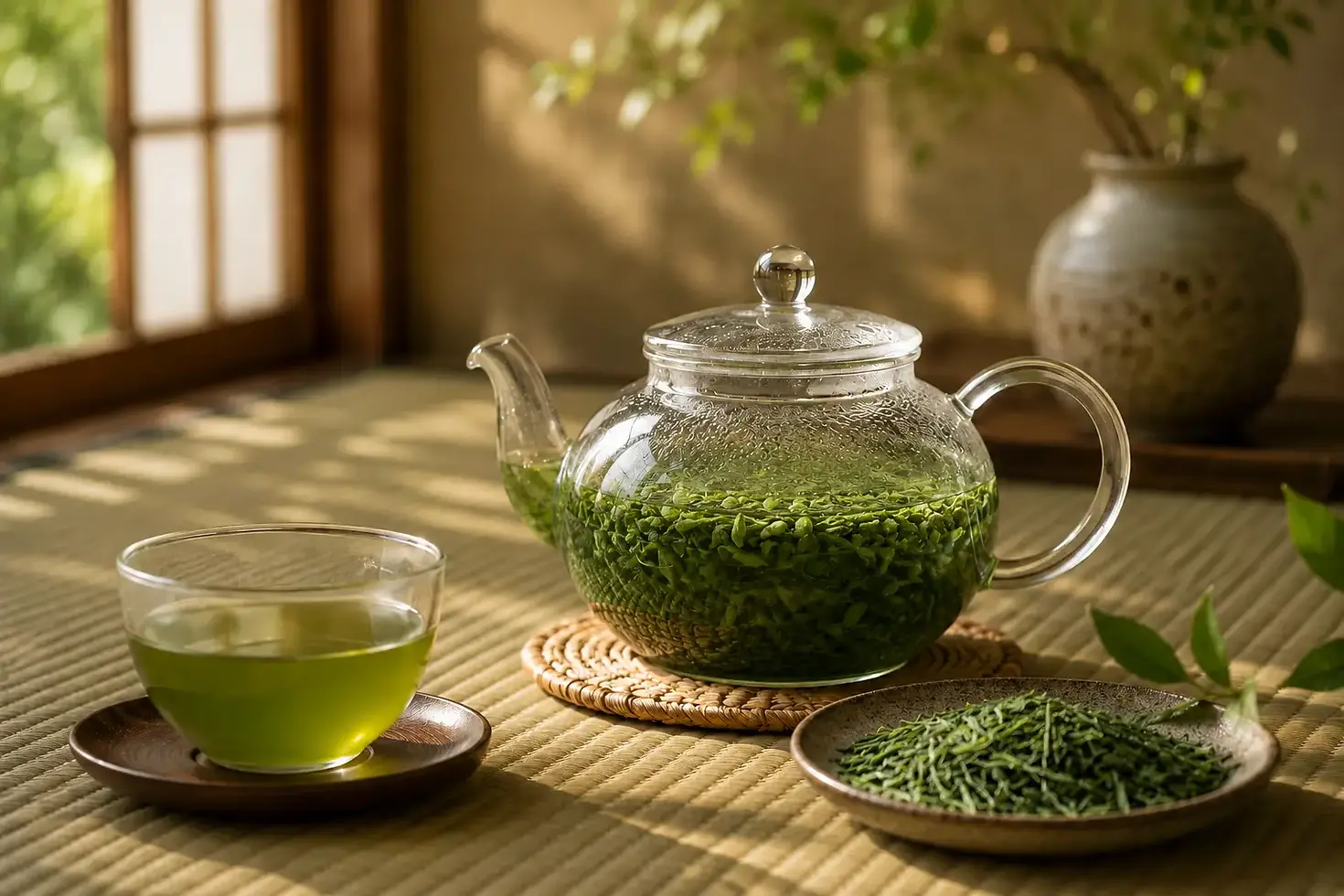
What Is Genmaicha Tea? A Japanese Tea Tradition

A cup of genmaicha often surprises people before they take their first sip. Its aroma is warm and toasty, closer to freshly popped corn or roasted grains than the grassy scent many expect from Japanese green tea. So, what is genmaicha tea? It is a traditional Japanese blend of green tea leaves and roasted brown rice, valued for a comforting character that makes genuine Japanese tea feel especially approachable.
Genmaicha has a humble spirit, but it is not a lesser tea. When made with carefully selected leaves and properly roasted rice, it offers an honest expression of craftsmanship: green, savory, nutty, and quietly satisfying. It is a tea for slow mornings, simple meals, and anyone who wants depth without heaviness.
What Is Genmaicha Tea Made From?
Genmaicha begins with Japanese green tea, most commonly bancha or sencha, blended with roasted brown rice. The tea leaves provide freshness, vegetal sweetness, and gentle astringency. The rice contributes its distinctive toasted aroma and rounded flavor. Together, they create a cup that is softer and more savory than many straight green teas.
The rice is sometimes soaked or steamed before roasting, depending on the producer's method. A few grains may puff or pop during the process, which is why genmaicha is occasionally called “popcorn tea” outside Japan. That nickname can be charming, but it does not mean popcorn is an ingredient. Authentic genmaicha is simply green tea and roasted rice.
The quality of both ingredients matters. Fresh Japanese leaves should still bring clarity and natural sweetness to the blend, while the rice should smell nutty and warm, never burnt or stale. A heavy-handed roast can cover the tea entirely. A thoughtful blend lets the green tea and rice speak in balance.
The Origin and Everyday Appeal of Genmaicha
Genmaicha is often connected with practical, everyday tea drinking. Brown rice was historically an accessible staple, and combining it with tea created a flavorful cup that could be enjoyed widely. Stories sometimes claim that rice was added only to stretch costly tea leaves, but tea history is rarely that simple. Over time, the blend became appreciated in its own right, not merely as an economical substitute for leaf tea.
That lasting appeal comes from its balance. Japanese green tea can be bright, grassy, marine, or brisk. Roasted rice brings a familiar grain-like warmth that makes those flavors feel gentler. For someone new to Japanese tea, genmaicha can be a welcoming first cup. For experienced drinkers, it offers a different kind of pleasure: less about intensity, more about ease and harmony.
It also belongs naturally at the table. Its roasted notes pair well with rice dishes, grilled fish, vegetable soups, sushi, and lightly seasoned meals. While highly aromatic teas can compete with food, genmaicha tends to settle into the meal with grace.
How Does Genmaicha Taste?
A well-made genmaicha usually opens with a toasted, nutty fragrance. On the palate, expect roasted grain, mild sweetness, gentle green vegetation, and sometimes a savory note similar to broth or toasted seaweed. The finish is generally clean and calm rather than sharp.
The exact flavor depends on the base tea. A bancha-based genmaicha often tastes earthy, mellow, and comfortably rustic. A sencha-based version can be brighter and more refined, with more green freshness beneath the roast. Neither is automatically better. It depends on whether you want a softer everyday cup or a livelier expression of the leaf.
You may also encounter matcha-iri genmaicha. This variation includes a dusting of matcha, which gives the brewed tea a deeper green color, fuller body, and more pronounced umami. It can be delicious, though it is a different experience from classic genmaicha. The matcha adds intensity, while traditional genmaicha is often prized for restraint.
Does Genmaicha Have Caffeine?
Yes, genmaicha contains caffeine because it is made with green tea. However, it is often lower in caffeine than a cup of straight sencha or matcha because the blend includes roasted rice as well as tea leaves. The actual amount varies with the base tea, leaf-to-rice ratio, serving size, water temperature, and steeping time.
For many people, genmaicha makes a comfortable afternoon choice when they want more character than an herbal infusion but a gentler cup than coffee. Green tea also naturally contains L-theanine, an amino acid associated with a calm, focused feeling. Still, caffeine sensitivity is personal. If you are limiting caffeine, brew it lightly or choose an earlier time of day for your cup.
Like other genuine green teas, genmaicha contains naturally occurring catechins and other plant compounds. These are part of the value of drinking tea as a regular ritual, but they do not turn any single cup into a cure-all. The real benefit is often simpler: replacing a sugary drink with an unsweetened tea you genuinely look forward to drinking.
How to Brew Genmaicha Without Losing Its Balance
Genmaicha is forgiving, which is another reason it belongs in an everyday tea cupboard. It does not require a formal ceremony, yet a few small choices will make the cup noticeably better.
Start with fresh water and use about one teaspoon of tea for every 8 ounces of water. Water around 175 to 185°F is a good range for most genmaicha. If you do not have a thermometer, let fully boiled water rest for several minutes before pouring. Steep for about 45 seconds to one minute for the first infusion.
Taste before extending the time. If the tea seems too light, add 15 to 30 seconds on the next brew rather than using hotter water immediately. Very hot water or a long steep can pull excess bitterness from the green tea leaves, leaving the roasted rice flavor flat by comparison. Good genmaicha should feel rounded, not scorched.
Many quality genmaicha teas can be infused two or three times. The first steep often emphasizes toasted rice, while later infusions may reveal more of the leaf's green sweetness. This is one reason leaf tea rewards attention: the cup changes slightly, but meaningfully, as you spend time with it.
Choosing a Quality Genmaicha
Look first for a clear ingredient list. A classic genmaicha should contain Japanese green tea and roasted brown rice, without artificial flavoring or unnecessary additives. The dry tea should smell clean, warm, and pleasantly roasted. A dusty, oily, or aggressively smoky aroma can suggest age or an overly harsh roast.
Origin also matters. Japanese green tea is shaped by cultivar, climate, harvesting, and the hands that process it. Tea from Shizuoka, one of Japan's most respected tea-growing regions, carries the benefit of generations of regional knowledge. Trusted sourcing gives you more than a place name on a package. It offers confidence that the tea has been selected with care from field to cup.
Freshness deserves equal attention. Buy an amount you can enjoy within a reasonable period, then keep it in an airtight container away from heat, moisture, and direct light. Avoid storing tea beside coffee, spices, or strongly scented foods. Tea leaves readily absorb odors, and genmaicha's delicate balance can be lost when its aroma is crowded by the pantry.
When Genmaicha Is the Right Tea
Genmaicha is a thoughtful choice when you want a cup that feels grounded rather than ceremonial. Matcha may suit a concentrated morning ritual, and a fine sencha may reward close attention to seasonal nuance. Genmaicha offers something else: a dependable warmth that fits naturally between tasks, alongside lunch, or at the end of a long day.
Its modest character is part of its soul. Brew a small pot, notice the toasted fragrance rising with the steam, and let a traditional blend of leaf and rice make an ordinary pause feel a little more considered.


Comments